Bonjour,
le dojo d’Etiolles sera fermé jeudi et samedi prochains.
En revanche vous pouvez nous rejoindre au dojo de Mennecy mercredi et samedi, et à Soisy vendredi.
Bonne journée
Cédric

Bonjour,
le dojo d’Etiolles sera fermé jeudi et samedi prochains.
En revanche vous pouvez nous rejoindre au dojo de Mennecy mercredi et samedi, et à Soisy vendredi.
Bonne journée
Cédric
Un cours difficile avec des épreuves pour chacun.
C’est un beau travail que nous avons réalisé.
Merci
Amitiés
Cédric
Le dojo est ouvert ce soir et cours ce soir à Etiolles maintenu.
Ce sera le jeudi 30 et le samedi 1er février que le dojo sera fermé pour le vœux du maire
A ce soir
Amitiés
Cédric
Bonjour à tous les membres du Bujinkan Seine Essonne Dojo
Ce message s’adresse aux membres du club ayant payé l’adhésion en plusieurs fois.
Nous n’avons pas déposé de remise sur le mois de décembre 2013 afin de faciliter vos achats pour les fêtes de fin d’année.
Le samedi 1 février 2014 nous remettrons tous les chèques des soldes des adhérents.
Si des personnes sont gênées financièrement nous prévenir avant.
Le président
En cas de soucis passagers n’hésitez pas à me contacter au 07 62 62 41 55.
Bien à vous
Patrick
Sanshin, kihon Happo, Keri, & Ken
amitiés
Vincent & Cédric
MASAMUNE 11 rue Regnault 75014 Paris
Stage retour Japon du Samedi 18 janvier de 16 h à 21 h et le dimanche de 10 h à 17 h
40 € pour un jour
70 € les 2 jours
bonne soirée
Amitiés
Cédric
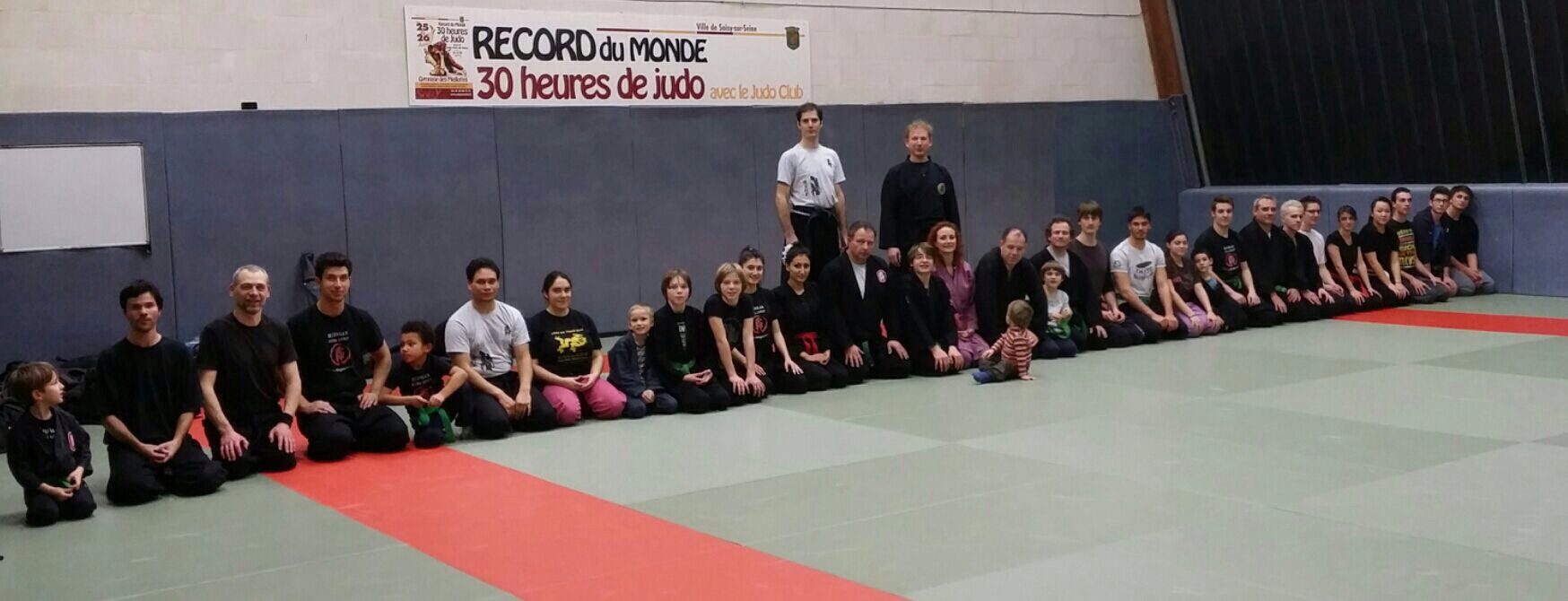
Travail sur le principe Sui (l’eau),
dans une ambiance très familiale
au dojo de Soisy vendredi dernier.
Amitiés,
Damien
 For the last 10 or more years (I don’t remember exactly) the Bujinkan France is inviting Sveneric Bogsater to the first seminar of the year.
I hope that you will join us this year!
AJC
Sanshin, Kihon Happo et Keri
A lundi
amitiés
Cédric

 Ninjas Club 91